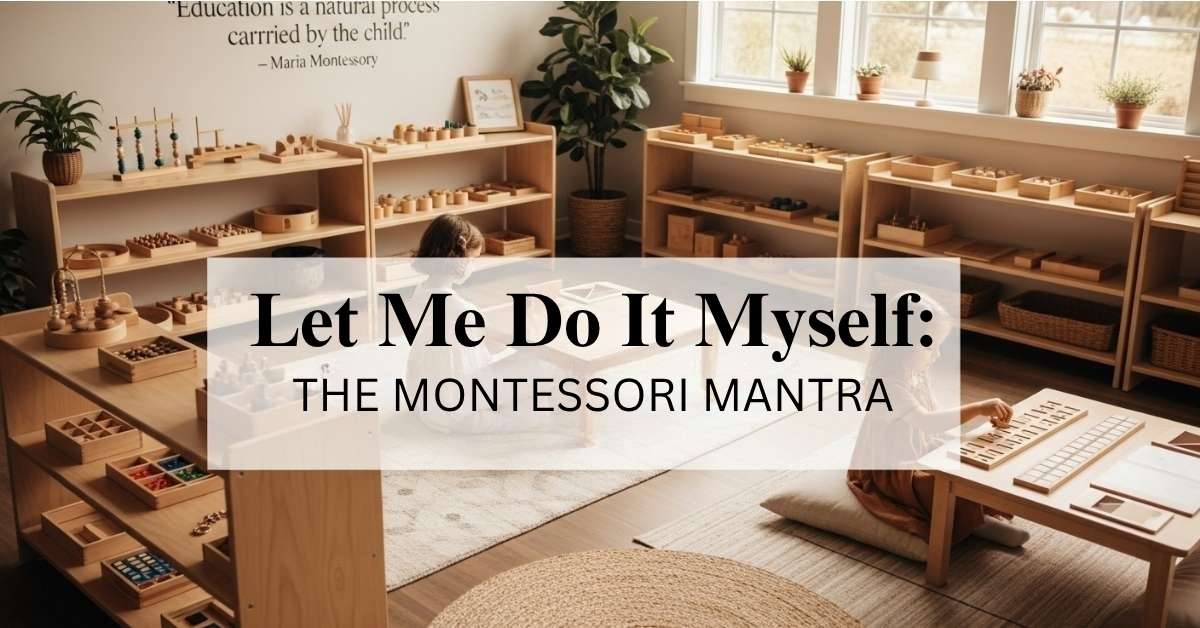
At The Montessori House, we take comfort in one very simple mantra that resonates throughout every corridor, each classroom, and every educational activity: “Let me do it myself.” It is a mantra that captures the essence of Montessori learning by fostering self-reliance, confidence, and a love of learning for a lifetime in every child.
As one of the best montessori schools in Chennai, we witness how the child thrives when offered freedom to discover, select, and act independently in an environment prepared specifically for them. The Montessori method is not merely a teaching method; it is a philosophy that honors the child’s natural tendency to educate and develop themselves.
The Philosophy Behind the Mantra
“Let me do it myself” is more than a sweet saying of toddlers who insist on lacing their shoes or pouring their own water. It is a fundamental developmental craving for independence. Dr. Maria Montessori noticed when children were allowed to be independent, they not only develop skills but also inner discipline, motivation, and self-esteem.
In conventional environments, instruction is usually teacher-led where children are instructed on what to do, how to do it, and when to do it. In a Montessori classroom, however, the balance is tipped. The child becomes the active learner in their own education, while the teacher serves as a guide.
Prepared Environment: Where Independence Begins
Our classrooms here at The Montessori House are specially designed to enable children to function independently. Low shelves, child-sized materials, self-checking materials, and a tidy, welcoming arrangement enable children to move freely and select their work based on interest and developmental level. Such an environment encourages responsibility where children are taught to tend to their environment, return materials to their place, and even assist others when necessary.
Each material and object serves a function. Take, for example, something as straightforward as buttoning frames or scooping grains with a spoon. It’s not simply about fine motor control, it’s about persistence, concentration, and completing something independently.
The Role of the Montessori Guide
Unlike conventional teachers, Montessori teachers do not control the learning process. Our qualified instructors at The Montessori House closely observe every child and provide cues only when needed. They realize when to intervene and more importantly, when to recess.
This faith in the child’s capability is important. When a guide does not step in instantly, the child has a chance to attempt, fail, adapt, and then succeed. Such a process increases resilience and problem-solving abilities. It also instructs a child that they can do it , a lesson to remain with them for the rest of their lives.
Independence Across All Age Groups
From toddlers to the elementary child, the Montessori method develops but continues to be focused on the child’s increasing need for independence.
Toddlers: During this period, children want to be independent in motion and care of self. We promote dressing themselves, selecting their work, and participation in practical life.
Preschoolers: At this age, children start demonstrating intense focus and interest in mathematics, language, and culture. They’re presented with hands-on materials upon which they can work autonomously, encouraging self-directed learning.
Older children: At this point, independence is carried over to research, group work, and peer-to-peer collaboration. They start taking charge, organizing time, and establishing their own learning objectives.
Respecting the Child’s Rhythm
One of the most underrated parts of independence is timing. At our Montessori, we recognize that all children don’t learn or develop at the same rate. Montessori teaching respects each child’s individual rhythm, giving them the time that they require to master a skill or concept.
When kids are not hurried or compared, they learn to have confidence in their initiative. They do not require motivation from outside, the pleasure of doing things is reward enough.
Montessori in the Home: Bringing the Mantra from School to Home
Parents will ask how they can support the Montessori mantra at home. Here are a few easy ways:
Engage children in everyday routines like laying the table, dressing themselves, or assisting in cooking.
Offer child-size tools and tasks.
Back off and let them attempt it, even if it takes more time or is messy.
Don’t praise unnecessarily or correct, allow their satisfaction to come from doing, not from pleasing.
Establish a consistent routine so the child can anticipate and assume responsibility for their day.
Montessori schools: Starting the Journey Early
The independence journey starts right from the initial years. For parents seeking playschools in Adambakkam, a Montessori-based learning environment means ensuring that this crucial phase is treated with care and purpose. 1.5-year-old children can also gain from spaces where they are free to practice daily tasks on their own whether it is hand-washing, dressing, or activity selection.
A Montessori-based playschool instills a solid base of independence, self-regulation, and love of learning which are all essential foundations for school and life success.
Final Thoughts: Independence Builds Confidence
“Let me do it myself” is not simply about getting something done, it’s about creating identity. At The Montessori House, we watch children change from tentative learners to self-assured explorers. They don’t wait for instruction; they look, select, act, and think. This self-directed learning becomes their automatic way of interacting at school and beyond.
Montessori schooling doesn’t hurry children toward adult-determined achievement. Rather, it provides space for them to come to their highest potential in their own time. And when they do, they don’t require clapping or rewards because nothing satisfies better than the pride of saying, “I did it myself.”