
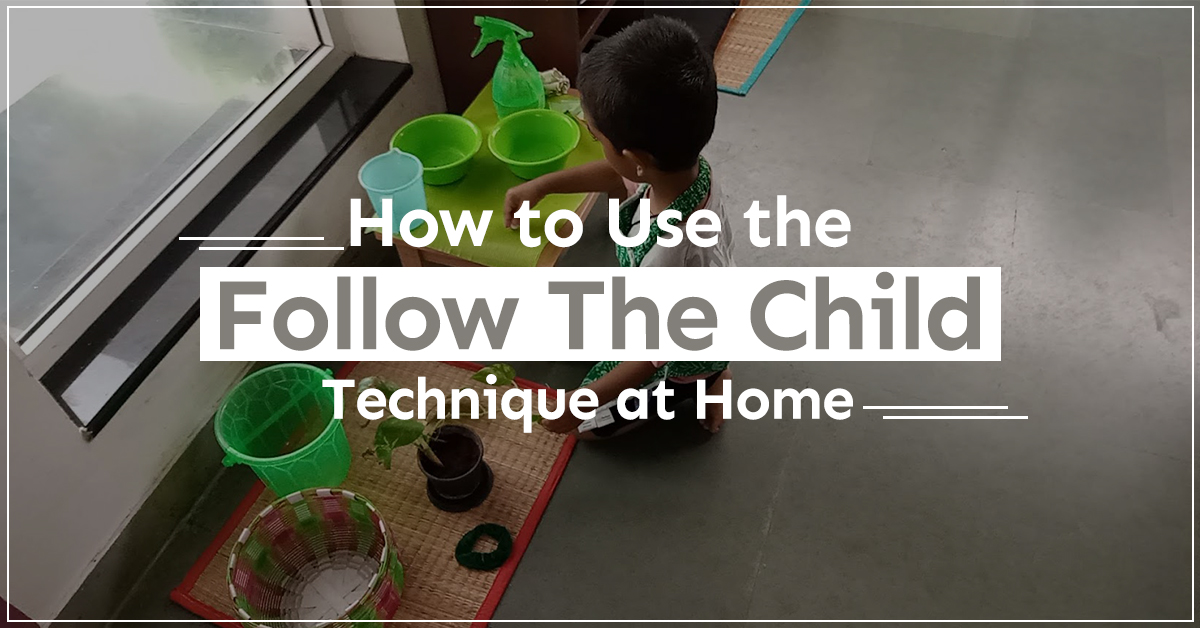
Every child develops according to their unique rhythm. The Montessori “Follow the Child” method is very much in line with this, as it allows kids to gain knowledge through their natural inquisitiveness and by having genuine experiences. Parents opting for montessori schools in Chennai get a clear view of the way this method fosters children’s self-reliance and, at the same time, helps them become good thinkers. And the coolest thing is, you can also build this beyond the Montessori school for this to work.
By reading this blog, you will find out how bonding with your kids differently will change your life and the lives of your kids.
What “Follow the Child” Really Means
Letting children do anything they want should not be a part of this meaning. It involves recognising the stage they are at and supporting that development. Kids who are allowed to discover and find solutions to their problems by themselves will become decision-makers who are more confident and capable.
Observe Before You Guide
Observation is the core of this approach. See:
- Which activities your child repeats most
- What makes them focused or frustrated
- How they express their needs even if they do not use words
Silent observation gives you the opportunity to intervene when assistance is really needed and to withdraw when learning is taking place.
Design a Space That Supports Independence
Kids develop well if they are allowed to do things on their own. A few small changes in your home can bring great opportunities:
- Have water, cups and snacks in places that are accessible
- Show toys nicely on low shelves instead of heaps
- Put child-friendly and useful things like a small piece of cloth or a broom
By being able to help themselves, kids grow a sense of responsibility, and their thinking skills become more clear; they also learn not to be in a hurry.
Allow Real-Life Activities
Montessori promotes the idea of work that has a purpose. Kids from the age of one to four and even later up to five years are really enthusiastic about contributing to the household work, which includes such things as pouring, sweeping, sorting, watering plants, or helping in meal preparation. These activities are not considered chores by the children; they are delightful times of exploration. Daily activities turn into educational experiences, which help to develop the children’s motor skills, attention span, and self-assurance.
Let Mistakes Be Part of the Journey
Water that has spilled or a fold that is not aligned is not an issue; it is progress. Instead of fixing the mistake right away, show how to repair it:
“Here is a cloth. We can wipe it together.” Such a mindset is a behavior model that is resilient and is an independent problem-solving method of the children.
Communicate Respectfully
Words are the main influencers of behavior. Speak in a clear manner, keeping your voice calm and encouraging:
- “Try pouring slowly; it gives you more control.”
- “How can we clean this up together?”
The voice of a parent becomes a guide, not a command. Children acquire self-discipline as they are treated with respect, not being pressured.
Let Them Decide the Speed
Repetition is development. When a baby repeats a certain move multiple times, he is actually going for mastery, not at all wasting time. Give them the opportunity to accomplish their tasks without rushing. Patience develops persistence, deep focus, and self-confidence.
Involve Children in Household Tasks
Kids adore the idea of being helpful. Even minimal contributions like putting back the books, arranging the pillows, and feeding the pet help kids learn these concepts through the process of responsibility and cooperation. Being included gives them an immense sense of pride in their skills and makes being a family a fun and easy shared work.
Why This Technique Matters Long-Term
A kid brought up with this method understands the process of coming up with their own ideas. As a result, they become:
- More secure when facing unfamiliar situations
- Better at finding solutions to problems
- Wondering and being interested in the world
Such characteristics stay with them long after their childhood and determine their development as lifelong learners.
The following child is not just a practice but a mindset by watching more, talking less, and having more faith. When normal days are turned into learning moments, your child gets more independence, self-confidence, and better thinking skills. Also, if you wish for this way of life to be continued outside the home, you will see that preschools in Velachery like our The Montessori House, are equipped with the right atmosphere to facilitate this development with respect and care.