Pongal encompasses community, gratitude, and colour. For young children within their early learning environments, Pongal can also serve as a joyful way for young children to connect with their culture through age-appropriate, simple experiences. In the case of The Montessori House, periodic celebrations are intentionally integrated into children’s daily lives so that they are able to observe and explore the celebration of Pongal as a cultural experience through meaningful expression. As one of the most trusted Montessori schools in Chennai, The Montessori House offers children the opportunity to learn through hands-on learning, respect for independence, and joyful exploration.
Why celebrate Pongal in preschool
A Pongal celebration in preschool will encourage children to learn how to develop socially and emotionally while learning the value of using language and how to say thank you for nature, food, farmers, and animals, as well as develop language skills. Various types of activity programming can be developed by educators to provide a variety of ways for children to experience Pongal while incorporating culture into daily Montessori-based learning activities such as observing, sorting, storytelling, and creating.
Storytelling, pictures, and conversation circles
Tell a simple story about farmers and their harvest using photos/illustrations of fields, cows, the sun and sugar cane. Keep the explanations short and to the point. Another way to create curiosity and develop language in preschool children is to ask questions like:
- Who grows our food?
- Why do we give thanks to the Sun?
Art and craft inspired by Pongal
The creativity of festivals through arts and crafts is a natural way for young children to express their experience of celebration. Young children can engage in many safe artistic and craft activities that will keep them busy for hours. Some examples are:
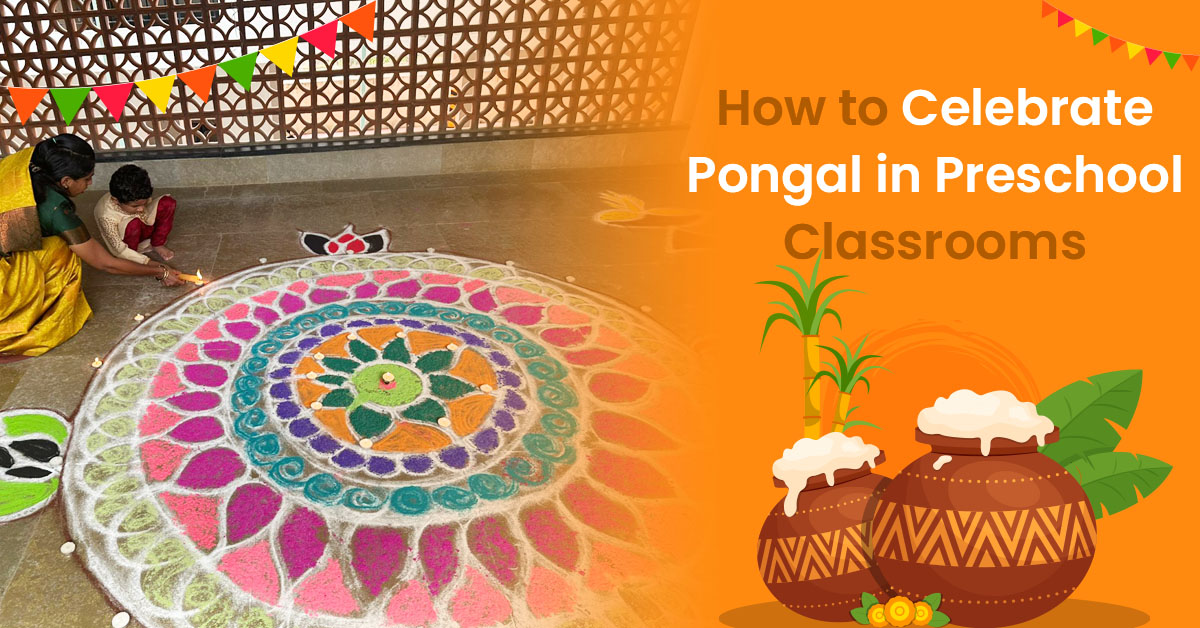
- Kolams created using colored rice, chalk, color powder and flowers
- Paper pots made with stickers and designs by the child
- Sugarcane crafts made using green strips of paper.
These are all simple activities for preschool-aged children to develop fine motor coordination and encourage creativity without a lot of instructions.
Hands-on Pongal-themed activities (suggested ideas)
The following activities give children opportunities to participate in Pongal-themed hands-on real-life experiences through independent play:
- Children can sort the components of Pongal by sorting grains such as rice, lentils, and beans into their own containers/bowls.
- Children can use picture cards depicting farm animals and crops to match them up with each other.
- Children create “thank you” cards to be given to farmers.
- Children create a simple collage representing the sun using yellow construction paper cutouts.
- Children can perform a seed-sowing activity in small cups so that they may be able to grow their own plants.
- Children role-play as farmers, farmers’ vendors, and family members of farmers during the time of Pongal.
All of these provide engaging, purposeful, and relatable Pongal activity experiences for kindergartners.
Practical life activities with festival connection
The Montessori classroom already includes the following activities within their educational model: pouring, transferring, or cleaning.
At the preschool level, we are celebrating Pongal, and much of this activity can be themed:
- Transferring rice and/or grains using scoops.
- Cleaning very small clay pots with a cloth.
- Arranging flowers in a way to create a ‘Pongal Corner’.
- Setting up miniature displays of what farmers grow for Pongal.
As children engage in these festivals, they are learning about coordination, all while being actively engaged with the festival.
Music, movement, and cultural expression
In addition to joyful energy from traditional rhythms, simple movement, and clapping games, children may also choose to wear traditional clothes at the discretion of their families. Teachers can introduce:
- Tamil Folk Songs
- Circle Dances
- A Parade of Celebration inside the Classroom
These activities keep the kindergarten-aged children engaged while they participate in the Pongal activity.
Safe cooking awareness activity
Pretend play and meaningful conversations can replace live cooking as vehicles for introducing the experience of cooking together. Teachers can use visuals or actual examples of ingredients such as jaggery and rice to teach children about how families make sweet Pongal at home while also reinforcing safety measures, such as only being near the stove if there is an adult present, so children learn that cultural significance surrounds the dish. Children will connect with the cultural aspect of the dish, and it will also teach children about taking care of what they are doing when cooking.
When celebrating Pongal at preschool, it’s not just about celebration, it’s about welcoming children with an invitation to culture, gratitude and community. At The Montessori House, we provide opportunities for children to explore the Festival of Pongal through storytelling, visual arts, creative movement, sensory experiences and authentic relationships. The Montessori House is an amazing place to learn about the festivals of India and many other cultures, and we hope that you will consider us when searching for montessori schools in Velachery for your children. The Festival Learning Approach at The Montessori House demonstrates the ways in which children are encouraged to observe, think, grow, discover and create, rather than just follow instructions.