
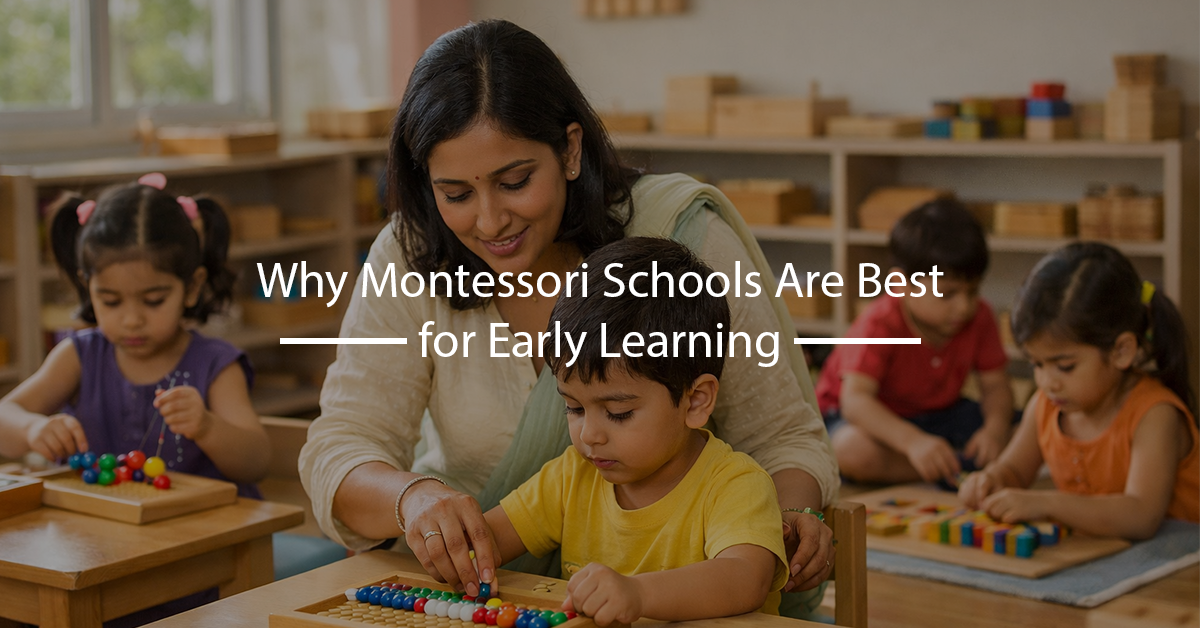
Children learn best when they’re curious not when they’re told to sit still and memorize. That’s the core truth behind the Montessori method, and it’s exactly why so many families are choosing the Montessori play schools in Madipakkam over conventional preschool options. Early childhood is not a waiting room for “real school.” It’s where the foundation is built.
Learning That Follows the Child
Traditional classrooms move at one pace for everyone. Montessori doesn’t. Each child works at their own rhythm, choosing activities that match where they are developmentally. A three-year-old who’s obsessed with pouring water into containers isn’t just playing they’re building hand-eye coordination, focus, and an early understanding of volume. That’s intentional learning dressed as play.
The classroom itself is a tool. Materials are placed at the child’s level, accessible without asking an adult. This small design choice builds something big: independence.
Hands-On Activities That Actually Stick
Montessori classrooms are rich with purposeful activity. Children work with:
- Sandpaper letters that let them feel the shape of language before writing it
- Bead chains that make abstract numbers tangible
- Practical life tasks like folding cloth, buttoning frames, and pouring, skills that sharpen focus and fine motor control
- Sensorial materials that train the senses to distinguish size, weight, texture, and sound
These aren’t just activities. They’re carefully sequenced experiences that lead children toward reading, writing, and math without pressure or flashcards.
Mixed-Age Classrooms Build More Than Academics
A four-year-old watching a five-year-old read doesn’t feel behind, they feel inspired. Mixed-age groups create natural mentorship. Older children reinforce their own knowledge by helping younger ones. A younger children develops social confidence faster. This dynamic doesn’t happen in a same-age classroom. It’s one of Montessori’s most underrated strengths.
The Role of the Teacher
In Montessori, the teacher is called a guide and that title is accurate. They observe more than they instruct. They introduce a material, step back, and let the child explore. Corrections happen gently and indirectly. This approach protects the child’s confidence while keeping learning on track. No child is made to feel slow or wrong for taking their time.
Why It Matters in the Early Years
Between ages two and six, the brain is forming pathways that influence attention, emotional regulation, and problem-solving for life. Rushing this period with rote learning doesn’t accelerate development it narrows it. Montessori expands it. Children who learn to make choices, manage materials, and persist through challenges carry those habits forward.
They also develop a healthy relationship with effort. When a child masters a puzzle or completes a practical life task alone, the satisfaction is real. That’s intrinsic motivation, and it’s far more durable than a sticker on a chart.
Finding the Right Start
Not all early learning environments are equal. The space, the materials, the training of the guides, and the philosophy behind daily decisions, all of it shapes who your child becomes in those first years.
If you’re exploring preschools in Velachery or anywhere across the city, The Montessori House offers an environment where children are genuinely seen, heard, and supported to grow at their own pace the way early learning was always meant to work.