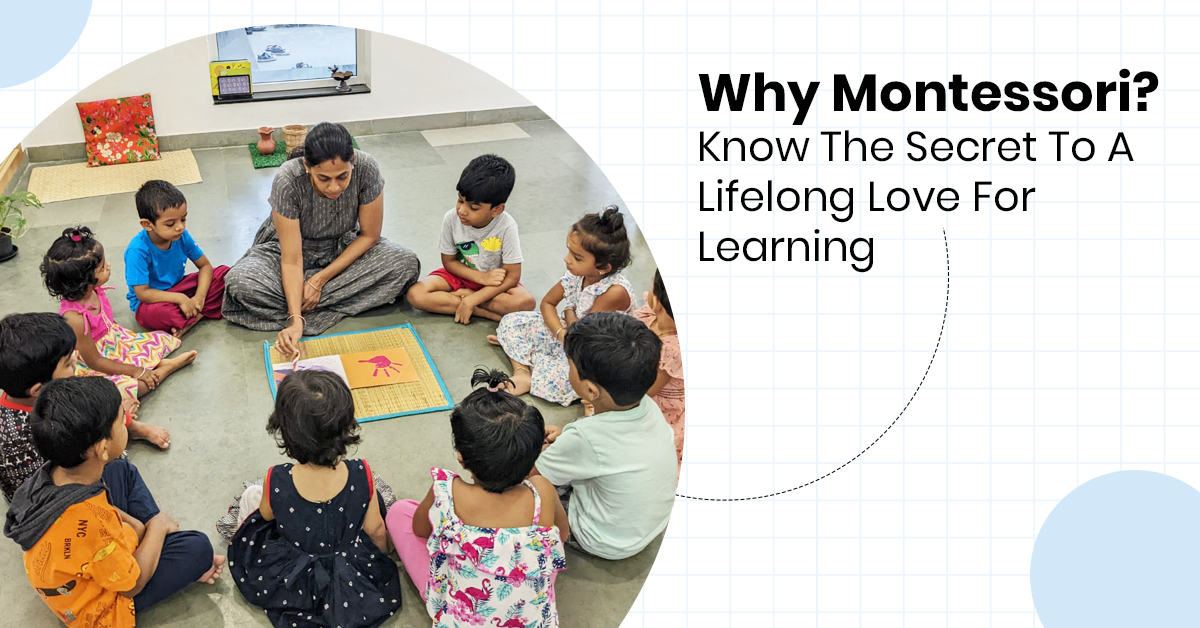
All newborns enter the world with curiosity. They constantly touch, question, observe, and test to understand and sense the world around them. But as time moves, the natural curiosity might fade as the learning becomes something to perform out of force rather than something to explore and awaken their curious mind. That’s where Montessori education comes in. It doesn’t try to control curiosity. It protects it.
The Montessori Difference: Learning That Lasts
At its heart, the Montessori method is about one thing—respecting the child. Respecting their rhythm, their choices, and their drive to understand.
The Montessori approach towards education, unlike traditional schooling, where there is a predetermined syllabus, we meet the kids where they are and what they want. It allows them to explore concepts when they’re ready, not when a textbook says so.
This freedom doesn’t create chaos. Quite the opposite. It builds focus, independence, and a deep love for learning beyond grades.
Why It Works
There are a few reasons Montessori education is so effective:
- Hands-on materials: Children love to learn through touching, feeling the different textures, to see the cause and effect by allowing them to feel free to do what they want; learning becomes natural, not abstract.
- Uninterrupted work cycles:Instead of moving from subject to subject in 30-minute blocks, children are given time—long stretches of it—to sink into deep concentration. This helps them learn patience, persistence, with a genuine interest in the task.
- Guided independence: Montessori educators avoid traditional styles of teaching instruction. They first observe and introduce necessary materials before creating distance so children can independently embrace their educational journey.
Awareness-based learning in Montessori development leads children toward becoming self-directed intellectual problem solvers who pursue continuous learning.
Where Does Montessori Work Best?
The strength of a method is based on its execution in the real world and its daily use. Every place in the Montessori House feels purposeful through its developmental materials, which match specific age needs with an inviting atmosphere.
During the toddler program (1.5–2.5 years), the education teaches students to become more independent by nurturing trust through basic care education alongside early movement and language skills.
The age group of 2.5–6 years starts to engage with principles of math, language, geography and science through hands-on materials rather than remembering memorised facts because the tangible approach helps them understand abstract concepts.
But what sets The Montessori House apart is the quiet presence of its teachers. Trained, certified, and deeply observant, the teachers must create an appropriate environment while offering selected tasks at strategic points and then provide space for the child to maintain their leadership role.
More Than Academics
It’s More Than Academics
As one of the leading Montessori schools in Chennai, we believeMontessori is not just about early learning. It’s about providing them with helping children to enhance soft skills that often go unnoticed: empathy, responsibility, and curiosity.
And when these are nurtured from the start, children don’t just learn. They love to learn.
That’s the secret. It’s not flashy. It’s not instant. But it’s real. And it lasts.