
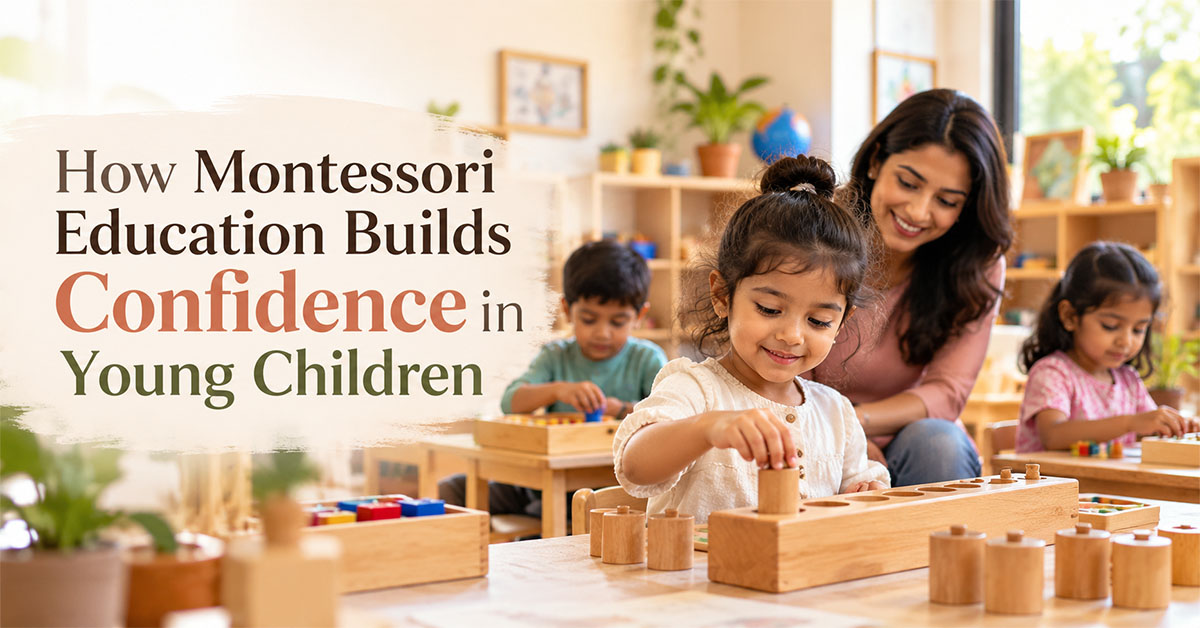
A confident child is not the loudest one in the room. It is the child who tries a puzzle again after it falls apart, who asks for help without embarrassment, and who says “I can do it” and means it. Parents searching for the Montessori Schools in Chennai often say they want exactly this: a child who feels capable. Confidence at this age is not about praise or trophies. It grows from real experiences of competence, and the Montessori method is built around creating them. In this blog, we will take a closer look at how the classroom, the materials and the teacher’s role come together to build a child’s belief in themselves.
Confidence Comes from Doing, Not Being Told
Dr. Maria Montessori opened her first Children’s House in Rome in 1907. Her central observation was simple. Children gain self-belief when they succeed at meaningful tasks on their own.
Adults often rush in to tie the shoe, pour the water or finish the puzzle. It saves time, but it also sends a quiet message: you cannot manage this yet. Montessori classrooms reverse that habit. Children get the time and tools to attempt tasks themselves, and each small success adds to a growing sense of “I am capable.”
A Classroom Built to Fit the Child
Look at a Montessori classroom and you will notice the furniture is child-sized. Shelves sit at eye level. Jugs are light enough for small hands, and every material has a fixed place.
This is called the prepared environment. A child can reach for an activity, use it and return it without asking an adult. That independence matters more than it seems. When a three-year-old fetches her own work and puts it back, she learns that she belongs in this space and can take care of it.
Freedom of Choice Within Clear Limits
Children in a Montessori classroom pick their own activities from a curated set. They also decide how long to stay with each one. The limits are firm, though. Materials must be handled with care, and other children’s work must be respected.
Making real choices gives a child ownership over their day. A child who chooses a task is far more likely to stay with it when it gets difficult. That persistence is a core part of confidence.
Materials That Let Children Fix Their Own Mistakes
Many Montessori materials are self-correcting. A cylinder block will only fit together properly when every piece sits in the right hole. If one is wrong, the child can see it without anyone saying so.
This changes how children relate to mistakes. Errors become information rather than failure, and there is no adult frown attached to them. Children learn to adjust and try again, which is the habit that carries them through school and beyond.
Practical Life: Where Pride Begins
Practical life activities look ordinary. Children pour water, peel a banana, sweep a floor, fold a cloth or water a plant. For a toddler, these are real achievements.
Each task has clear steps and a visible result. The child can see that the plant is watered or the table is clean, and they did that. This kind of contribution builds a sense of purpose that no sticker chart can match.
Mixed Age Groups Support Everyone
Montessori classrooms usually group children across a three-year age range. Younger children watch older ones and pick up skills naturally. Older children get to explain and help, which strengthens their own understanding.
Both sides benefit. The younger child sees what is possible, and the older child discovers that they have something worth sharing.
The Teacher’s Role: Guide, Not Judge
Montessori teachers, often called guides, observe more than they instruct. They notice what each child is ready for and introduce new work at the right moment. They step in when needed, but they hold back when a child is working through a problem.
Their feedback also sounds different. Instead of “Good job!”, a guide might say, “You kept going even when the tower fell.” Praise that describes effort helps children value the process. It also stops them from depending on approval to feel good about their work.
Ways to Carry This Home
Confidence grows faster when school and home work in the same direction. A few simple changes make a difference:
- Keep a low hook for their bag and jacket so they can hang things up themselves
- Let them pour their own water, even if some spills
- Offer two choices for clothes or snacks instead of deciding for them
- Allow extra time in the morning so they can dress without being hurried
None of these takes much effort. Over time, they show a child that the adults around them trust them to try.
Patience Is Part of the Method
Some children take longer to settle into independent work, and that is perfectly normal. Confidence does not appear overnight. It builds through repetition, calm encouragement and an environment where trying is safe. Parents who resist the urge to step in too early often see their child surprise them within weeks.
At The Montessori House, we see confidence take shape every day. It shows in a child who carries her own tray to the table, in a boy who helps a younger friend with a button, and in a toddler who beams after pouring water without spilling a drop. Our guides focus on observation, patience and respect for each child’s pace so that every little one feels capable and secure.
If you are comparing Play Schools in Pallikaranai, we invite you to visit our classrooms and watch how children learn here. Seeing the environment in action often answers more questions than any brochure can.